
Submarine cable is one of the vital technologies in intercontinental communications and maritime connections. Submarine cables serve as communication bridges between countries and various regions of the world.
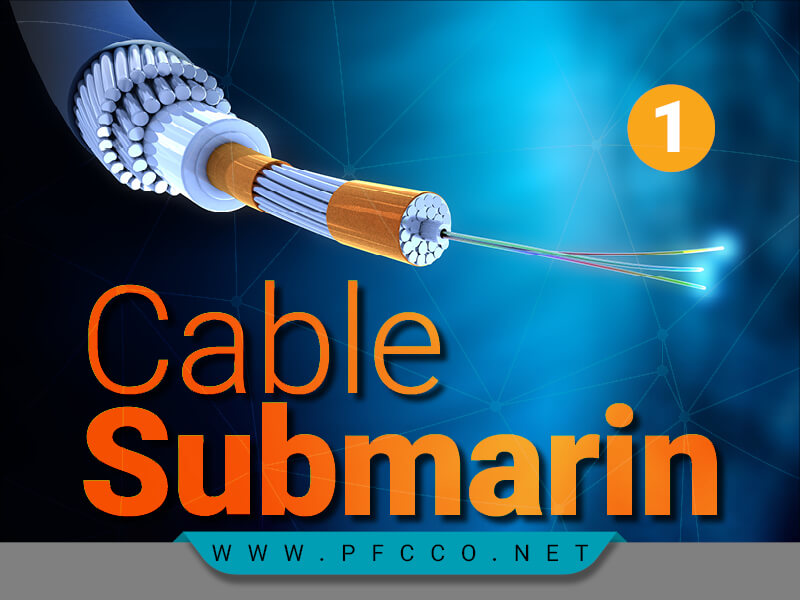
The structure of submarine fiber optic cables
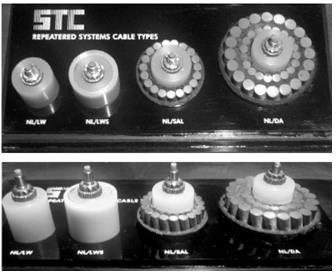
Submarine cable structure
Submarine cables are typically comprised of diverse structures designed to withstand harsh underwater conditions and ensure secure data transmission. The general structure of these cables includes:
- Optical fibers: The primary component of submarine cables consists of optical fibers that utilize light signals for data transmission. These fibers are often made of special glass materials optimized for high-speed and low-traffic data transmission.
- Insulation layers: Surrounding the optical fibers, insulation layers made of materials such as polyethylene are employed to prevent reactions with water or other substances in the underwater environment. These layers help mitigate side effects such as corrosion.
- Protective layers: Beyond the insulation layers, protective layers made of materials like steel or aluminum are utilized. These layers act as shields against high underwater pressure and physical hazards such as damage and external pressures.
- Insulating layers: Some submarine cables utilize layers that prevent the propagation of electromagnetic fields. These layers are typically made of materials like polyethylene foam or other insulating materials to reduce electromagnetic interference.
- Inner and outer layers: Depending on the specific needs of each cable, additional inner or outer layers may be added. These layers may serve purposes such as increasing cable strength, providing additional protection for optical fibers, or other objectives.
- Outer covering: Finally, an outer covering made of materials resistant to water and other environmental factors present in underwater conditions is applied to the cable for added protection.
The overall structure of submarine cables ensures that they are resilient against harsh underwater conditions and facilitate the rapid and secure transmission of information.
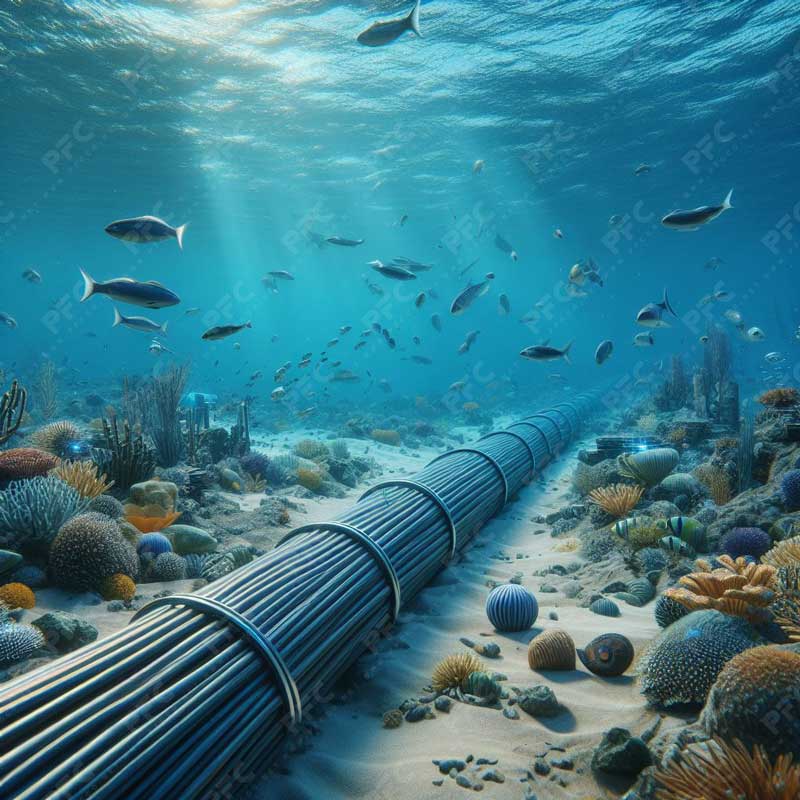
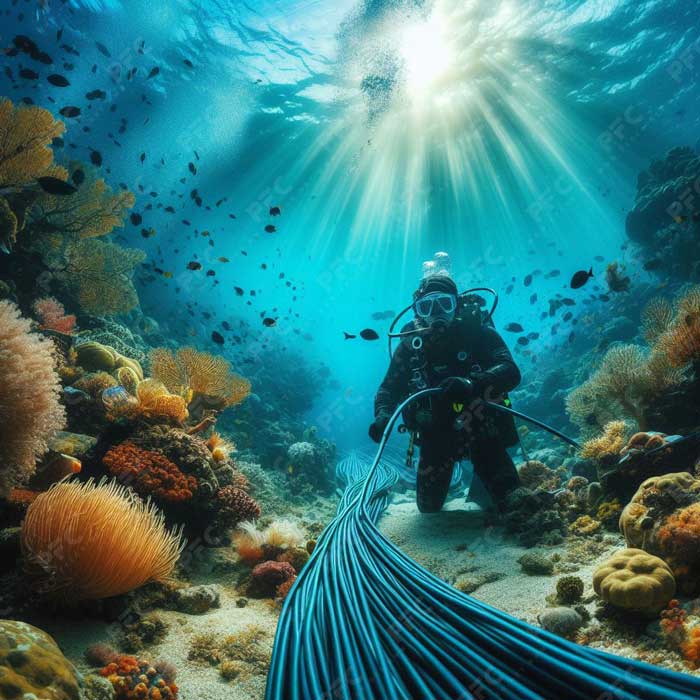
Fiber optic cable underwater
The length of the submarine cable.
The length of submarine cables varies, and depending on specific needs and applications, there can be significant differences. In general, submarine optical fiber cables can be extremely long, ranging from several hundred kilometers to several thousand kilometers in length.
Submarine internet cables
The application of submarine optical fiber cables
Some common applications of submarine cables include:
1. Telecommunications and Internet: Submarine cables are used to connect telephone and internet networks between countries and continents. These cables are often laid directly from one shore to another or from one continent to another.
2. Oil and gas communications: In the oil and gas industries, submarine cables are used to transmit data and information related to drilling, production, and transportation processes from under the sea to the shores.
3. Underwater environment monitoring: Submarine cable systems are utilized for monitoring underwater environments, such as seismology, environmental surveillance, and weather changes.
4. Energy transmission: In some cases, submarine cables are used to transmit energy from offshore wind farms or marine wave energy to shores or power distribution systems.
For example, some submarine cables used for international internet communications can be thousands of kilometers long or even longer. These cables are often laid from one country to another, from one continent to another, facilitating global communications.
Challenges in the installation of submarine cables
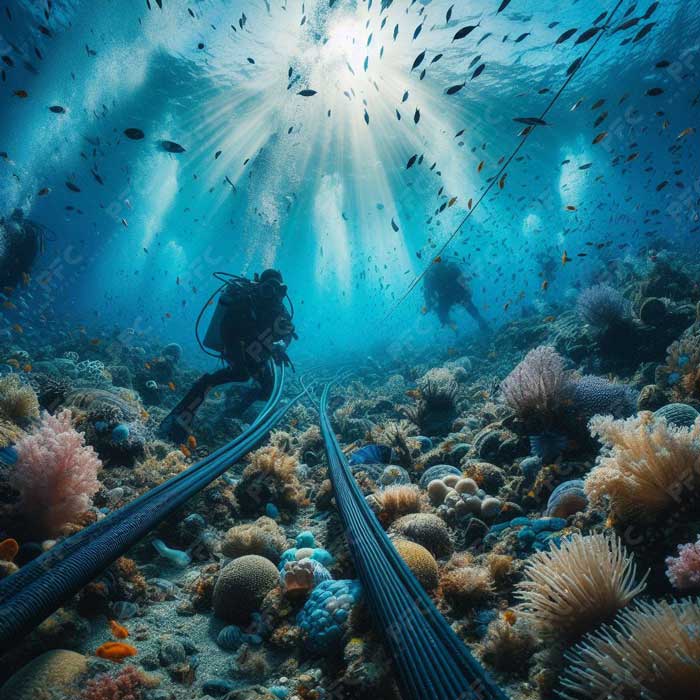
The installation of submarine cables comes with various technical and physical challenges that require precise planning and sensitive execution. These challenges include:
1. Technical installation challenges:
Temperature variations: In ocean depths, temperatures are usually lower than the surface, and they change with depth. These temperature variations can affect the performance of the cable and its constituent materials.
Heat dissipation: Data transmission along the length of a submarine cable leads to heat dissipation. Proper design of the cable structure is necessary to control heat and prevent data quality degradation.
Impact and vibration: Submarine network cables face specific physical conditions underwater. Earth movements and weather changes can cause impacts and vibrations on the cables, necessitating a design with adequate resistance.
2. Vulnerability to damage:
Due to their underwater location, cables are not readily accessible, and repairs in case of damage or failure pose a challenge. Planning for repairs and maintenance must be done carefully.
3. Environmental issues:
Environmental impacts: Installing submarine cables may affect underwater ecosystems. Dealing with marine ecosystems and environmental protection requires detailed ecological studies.
Electromagnetic interference: The underwater environment is full of electromagnetic activities that may interfere with data transmission through cables, potentially degrading communication quality.
4. Geographic challenges:
Water depth: Submarine cables face water pressure in ocean depths, which increases with depth. Cable design needs to withstand high water pressure at considerable depths. Cable length and water depth influence cable installation, with pressure loss, heat dissipation, and cable mechanical resistance being calculated considering these conditions.
Wave and ocean current impacts: Waves, ocean currents, and sediment displacement can damage submarine cable systems. The effects of these factors must be considered in the design and installation of cables.
Seismic activity: Undersea areas are usually prone to seismic activities and underwater faults, which can severely impact cables, requiring repairs and maintenance.
5. Hydrostatic pressure changes:
During the installation of submarine cables or repairs, changes in hydrostatic pressure due to depth variations can pose challenges.
Given these issues, the development and use of technologies that make submarine cables more resistant to these challenges are of paramount importance.
Challenges in the maintenance and repair of submarine cables
Technical maintenance issues include:
1. Reduction in useful life:
Environmental factors can gradually reduce the useful life of submarine cables. This requires careful planning for periodic maintenance and repairs.
2. Physical maintenance challenges:
Damage from environmental factors: Weather changes, earthquakes, or even human activities can damage cables. Immediate repairs and response to emergencies are essential.
3. Security challenges:
Cyber threats: Submarine cables are susceptible to cyber threats. Implementing security measures, including encryption and continuous monitoring, is crucial to protect transmitted data.
4. Technological challenges:
Updating to new technologies: Although submarine cables usually serve for a long time, there is also a need to update to new technologies to keep up with the world’s evolving needs.
Overall, the installation, maintenance, and repair of submarine cables require careful attention and intelligent management to remain a reliable provider of global communications.
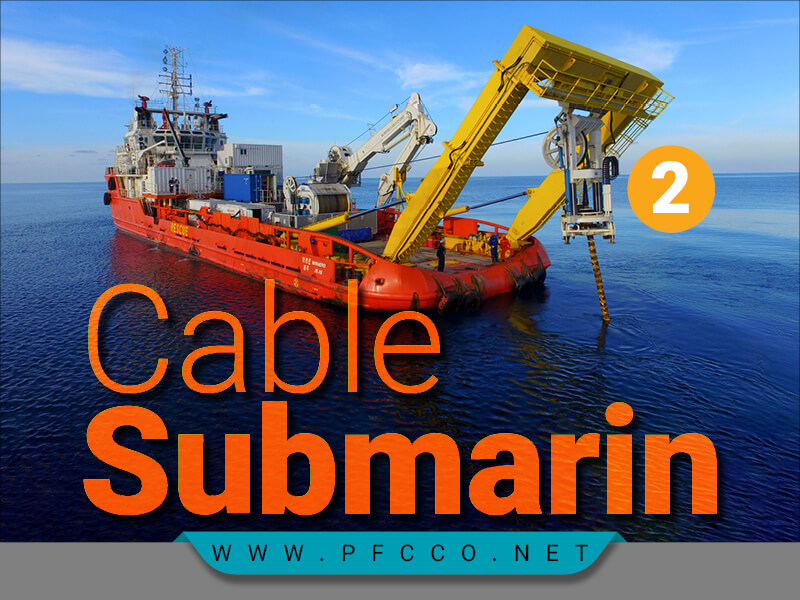
Submarine network cable
The application of network cables underwater.
Submarine cables are used underwater to transmit various types of information and energy. These cables are employed for various transmissions, including telecommunications, energy transfer, environmental monitoring, and more, in the underwater environment. Below are some important applications of submarine cables underwater:
1.Internet and Telephone Communications: One of the primary uses of submarine cables is for internet and telephone communications between countries and continents. Submarine cables enable the transmission of data, voice, and video communications over long distances.
Security solutions for submarine network cables.
Security measures related to submarine network cables focus on the following:
1. Encryption: One of the most important security strategies in submarine cables is the use of strong encryption to protect sensitive information. This method secures data transmitted through submarine network cables against unauthorized access.
2. Physical Protection: Submarine cables need to be physically protected as well. This includes preventing unauthorized access to the cables by individuals, marine vehicles, weapons, or even marine animals.
3. Threat Detection: Threat detection systems used in submarine cables have the capability to detect abnormal activities such as attempts to tamper with the cables, physical attacks, or intrusion attempts.
4. Access Management: To protect sensitive information, access to submarine network cables should be restricted to authorized individuals only. Access management systems are designed for this purpose.
5. Anti-Eavesdropping Measures: Some submarine cables may be susceptible to eavesdropping attacks. Anti-eavesdropping measures utilize technologies such as special coatings and electronics to prevent potential eavesdropping.
6. Risk Management: Continuous assessment of security risks and updating security systems to prevent unknown attacks and adapt to the variable underwater environment.
7. Repair and Maintenance: Implementing periodic repair and maintenance programs to maintain optimal performance and prevent sudden failures that may compromise cable security.
8. Identity Verification and Authentication: Using identity verification and authentication systems to ensure that only authorized individuals have access to the submarine cables.
A combination of these solutions can help enhance the security of submarine network cables and ensure the protection of information in underwater environments.
“The map of underwater fiber optic cables”
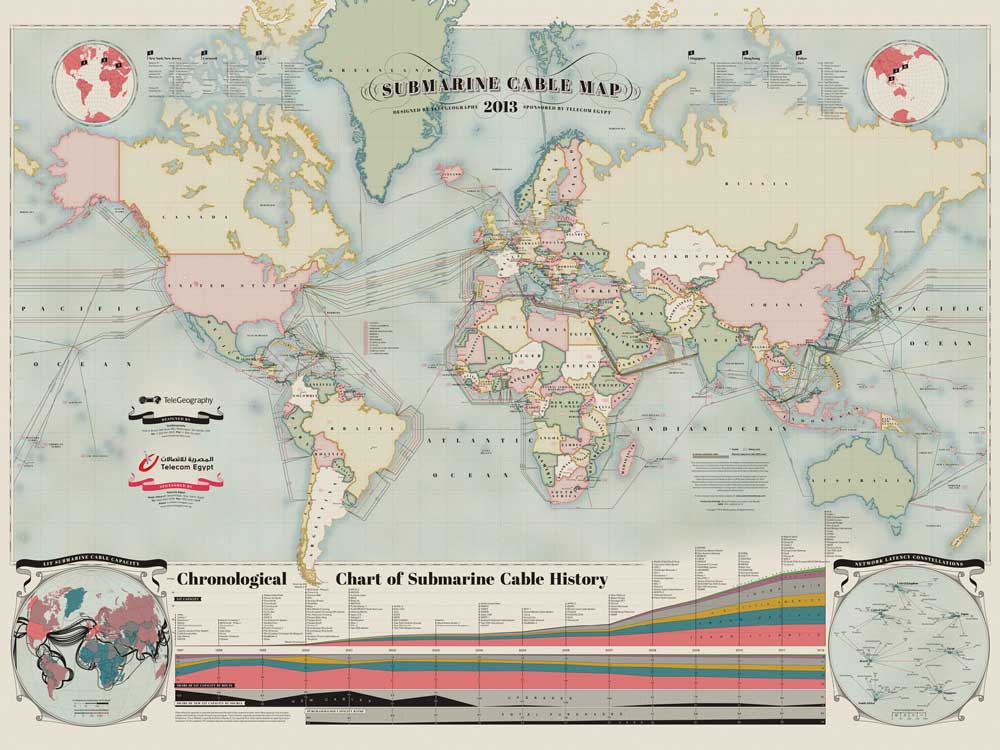
Map of underwater fiber optic cables
“The underwater internet cables of Iran”
Submarine internet cables in Iran play a crucial role in international communications. These cables serve as the primary connections for the country’s internet communication with other nations. One of the most important submarine cables associated with Iran is the global cable OFC-2, which connects Iran to Europe via the Persian Gulf. Additionally, there are other cables that link Iran to neighboring countries and other regions of the world. These cables are of great importance in international communications, trade, and the transmission of various data. Any interruption or technical issue with them can affect internet communications significantly.

“The map of underwater internet cables in Iran”