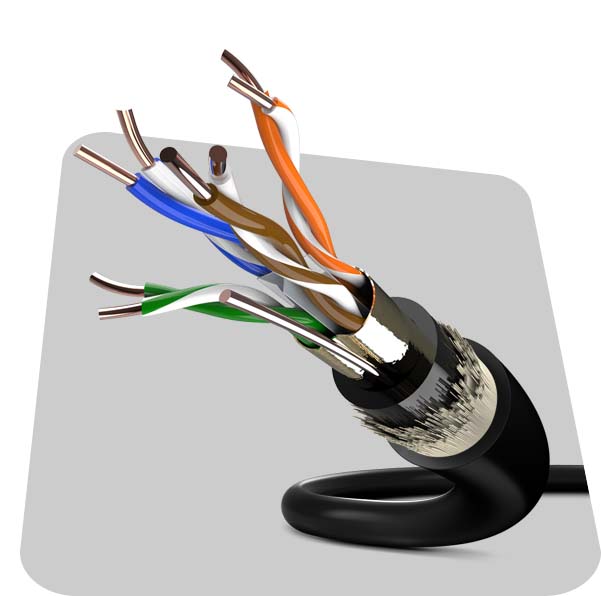
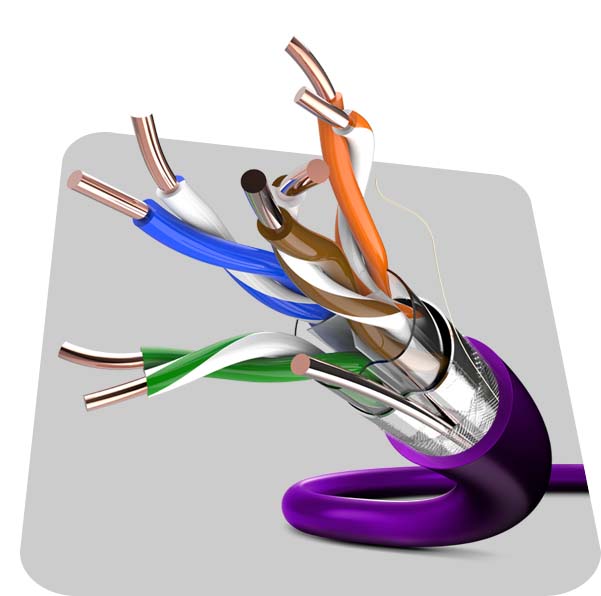
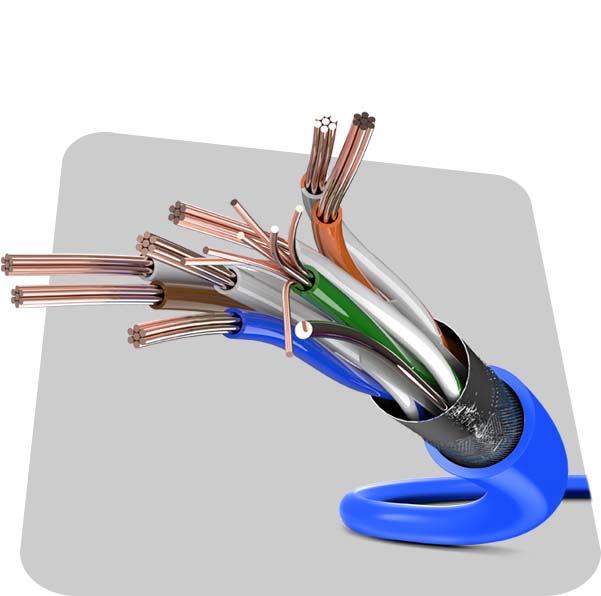
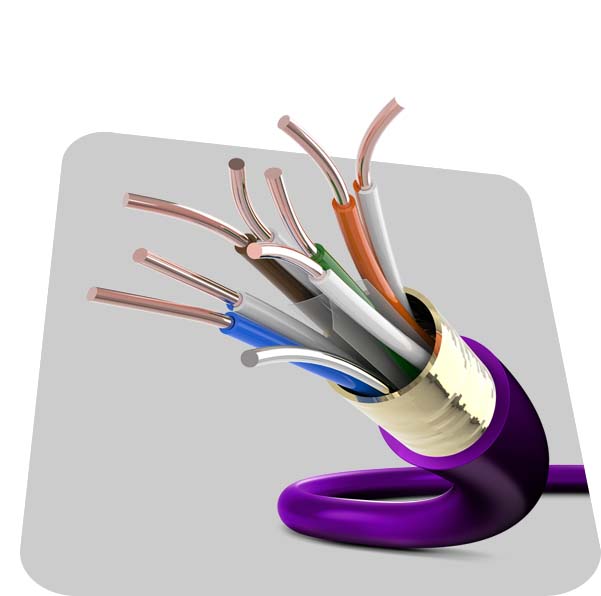
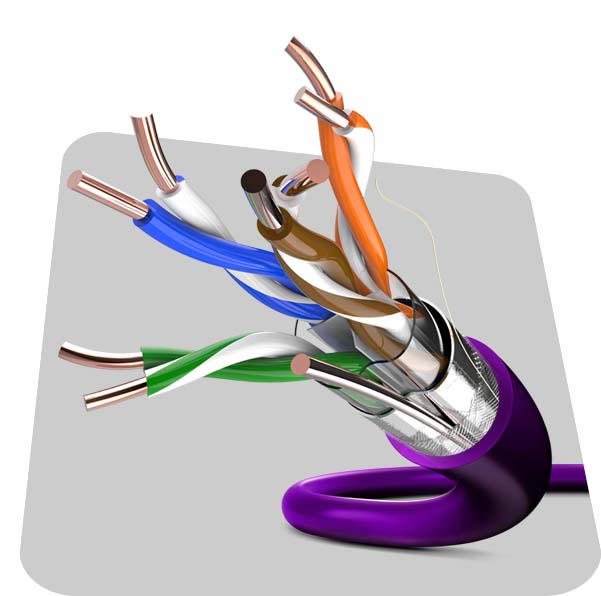
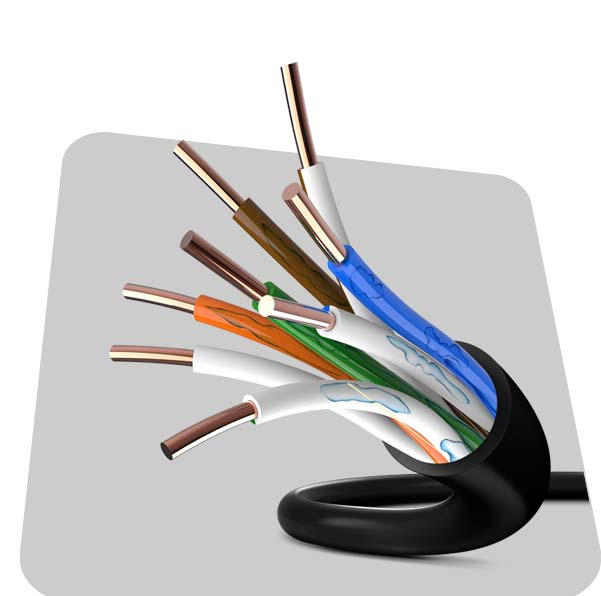
Iranian network cable production with the most suitable price and high quality.
Network cable is one of the most crucial components in any computer network and is available in various types on the market. Even with the increasing prevalence of wireless networks, network cables have not lost their significance and remain one of the most important hardware components. Generally, a network cable consists of wires made of copper and glass, whose main function is to transmit data between two or more devices. Depending on the network protocol and topology, network cables are divided into various types, which we will discuss further. So stay with us to choose the best Iranian network cable for your network.
Iranian PFC network cable
One of the highest-quality network cables you will find among Iranian brands is the PFC network cable, which is available in various models on the market. This Iranian PFC network cable is produced using high-quality raw materials and the contemporary expertise of Iranian engineers, and it will be available to you at an affordable price.
Types of Iranian PFC network cables include the following, and depending on your needs, you can choose any of these models. (These models will be available in two different lengths based on your demand.)
PFC CAT5e UTP Indoor Network Cable
PFC CAT6 FTP Indoor Network Cable
PFC CAT5e FTP Outdoor Network Cable
PFC network cable
PFC CAT6 SFTP Indoor Network Cable
PFC CAT6 Anti Rodent Outdoor Network Cable
PFC CAT5e SFTP Outdoor Network Cable
PFC CAT5e FTP Indoor Network Cable
PFC CAT6 SFTP Outdoor Network Cable
All network cables manufactured by PFC share common features that distinguish them from other competitors. These include 98% purity copper, one-year warranty, unparalleled quality, use of high-quality polymer materials, compliance with AWG standards, and so on, which are among their most important characteristics.
One of the most important advantages of Iranian PFC network cables is their significantly lower price compared to foreign network cables while still providing comparable quality. These cables are resistant to wear and tear and will accompany you for a long time.
Types of Iranian network cables:
Network cables are classified based on various criteria such as bandwidth, speed, etc. You may have seen the term “Cat” in the names of these cables, which stands for the English word “Category,” followed by a number. The higher the number, the higher the data transmission speed of the cable. For example, CAT5 cable belongs to Category 5, which has high data transmission speed and low susceptibility to noise. The data transmission speed of CAT5e cable is estimated to be one hundred megabytes per second, with a bandwidth of 250 megahertz. However, CAT6 network cable has a data transmission speed equivalent to 1000 megabytes per second and its bandwidth has increased to 500 megahertz.
Introduction to types of network cables:
Network cables differ in terms of material, size, and whether they are shielded. For example, the term UTP is used for unshielded network cables, and SFTP is used for shielded network cables with foil. Shielded network cables are divided into more diverse categories, which we will explain below
U/UTP network cable :
This network cable is unshielded and lacks any form of protection, having only one main covering.
F/UTP network cable :
In this network cable, a foil is wrapped around each of the four pairs.
U/FTP network cable :
In this model, a foil is wrapped around each pair.
SF/UTP network cable :
In this network cable, one shield is used, and beside it, a foil is wrapped around each of the four pairs.
SF/FTP network cable :
In the SF/FTP network cable, they have utilized a braided iron shield, and each of the four pairs is covered by a foil, with an additional foil wrapped around each pair.
F/FTP network cable :
In the F/FTP network cable, a foil is used around each of the four pairs, and another foil is used around each pair.
In addition to the above classifications, in general, observe the following letters in the name of network cables, for which we will briefly explain each:
The letter U in network cable:
This abbreviation stands for “Unshielded,” meaning lacking a shield.
The letter F in network cable:
The letter F in network cable is equivalent to “Foiled,” meaning it has foil.
The letters TP in network cable:
To indicate twisted pairs in network cables, they use “TP,” which stands for Twisted Pair.
The letter S in network cable:
This letter signifies the use of an iron shield in the construction of the cable.
The most common types of network cables in the market based on frequency are:
When purchasing network cables, you may encounter each of the following cable types. With knowledge about their specifications, you will be able to make a better choice.
CAT1 network cable :
The first category of twisted pair network cables is CAT1 network cable, which is only used for transmitting audio signals and is utilized as telephone wire.
CAT3 network cable :
The first category of copper network cables capable of data transmission is CAT3 network cable, which has a frequency equivalent to 10 megahertz and is not commonly used today due to limited bandwidth.
CAT5 network cable :
This network cable is of the UTP type, and its data transmission speed reaches 100 megabytes per second. The bandwidth of this model is specified as 100 megahertz, and its maximum coverage distance is 100 meters. Currently, it is less popular than other cables and lacks compliance with world standards.
CAT5e network cable :
The Cat5e network cable is an improved version of the previous model, with data transmission speed increased to up to 1000 megabytes per second, and its frequency remains at 100 megahertz.
CAT6 network cable :
In CAT6 network cable, there is a coating on the main cable that plays an important role in reducing signal interference. The data transmission speed in this model is 1000 megabytes per second, and its bandwidth is 250 megahertz. Typically, this cable can be used up to a distance of 60 meters, and beyond this distance, the data transmission speed will decrease.
CAT6a network cable :
CAT6a network cable has experienced significant improvements compared to the previous model and carries the suffix “Augmented,” indicating the optimization of this network cable. The thickness and durability of the cable have increased, and its frequency has been raised to 500 megahertz. The data transmission speed in CAT6a network cable is ten gigabytes per second, and it can be extended up to 100 meters.
CAT7 network cable :
This cable is among the most advanced types of network cables, with a frequency reaching up to 600 megahertz and a data transmission speed of up to 100 gigabytes per second. At distances greater than 15 meters, this speed will decrease to 10 gigabytes per second, still providing a very good speed.
نوع کابل شبکه LAN
سرعت انتقال داده
پهنای باند
استفاده در
CAT3
10 مگابایت در ثانیه
16 مگا هرتز
شبکه های Token Ring
CAT4
16 مگابایت در ثانیه
20 مگا هرتز
شبکه های Token Ring
CAT5
100 مگابایت در ثانیه
100 مگا هرتز
Ethernet و شبکه های Token Ring
CAT5e
1000 مگابایت در ثانیه
100 مگا هرتز
شبکه های Ethernet Gigabit
CAT6
1000 مگابایت بر ثانیه
250 مگا هرتز
شبکه های Ethernet Gigabit
CAT6A
10 گیگابایت در ثانیه
500 مگا هرتز
شبکه های 10G
CAT7
10 گیگابایت در ثانیه
600 مگا هرتز
شبکه های 10G
Types of network cables categorized by frequency at a glance:
Types of network cables classified by material:
Network cables are divided into two categories in terms of material: copper network cables and fiber optic (glass) network cables.
Copper network cable.
In copper cables, signals are transmitted using voltage and electric current. With an increase in the amount of copper used in the wire, its bandwidth will also increase. This type is more suitable for shorter distances, such as the distance between two computers.
کابل شبکه فیبر نوی :
در کابل شبکه شیشه ای یا فیبرنوری، سیگنال ها توسط پالس و امواج نوری منتقل می گردند. این کابل مناسب مکان هایی است که نیاز به انتقال داده با سرعت بالا دارند. در بیمارستان ها، فرودگاه ها، مراکز داده، بانک ها و … از این نوع کابل ها استفاده میشود که علاوه بر سرعت انتقال داده بالا، برای فواصل دور هم کاربرد دارد.
مزایا و معایب کابل شبکه به هم تابیده شده یا مسی :
کابل های شبکه دارای مزایا و معایب مختلفی هستند که با آگاهی از آنها می توانید انتخابی مناسب تر داشته باشید.
مزایای کابل شبکه به هم تابیده شده :
کاهش هزینه : کابل های شبکه به هم تابیده شده دارای قیمت مناسبی بوده و پاسخ گوی نیاز شما خواهد بود.
نصب آسان : برای استفاده از کابل شبکه به هم تابیده شده هیچ سختی نخواهید داشت و به آسانی نصب میشوند.
قابل استفاده برای انواع مصارف : از این کابل های شبکه می توان برای انواع مصارف مانند خانگی یا دیتاستر استفاده کرد.
مناسب برای تمامی وسایل : به دلیل سوکت به کار رفته در ساخت کابل شبکه به هم تابیده شده به راحتی میتوان از آن برای هر دستگاهی استفاده کرد و قابلیت اتصال به تمام دستگاهها را دارا خواهد بود.
معایب کابل شبکه به هم تابیده شده :
در کنار مزایای قابل قبول کابل های شبکه، در چند مورد نقاط ضعفی را از خود نشان می دهد که شامل موارد زیر است.
ایجاد نویز : در کابل های شبکه ای که بدون روکش هستند، نویز جذب شده و کیفیت اتصال را کاهش میدهد.
کیفیت انتقال پائین : کابل های شبکه به هم تابیده شده نسبت به کابل های شیشه ای سرعت انتقال داده پائینتری دارند ولی به دلیل قیمت پائین و نصب آسان طرفداران زیادی دارد.
اتلاف انرژی : اتلاف انرژی در کابل های شبکه بهم تابیده شده در فواصل دور زیاد است و اگر فاصله از 40 متر افزایش یابد، شاهد هدر رفتن این انرژی خواهید بود.
مزایا و معایب کابل شبکه فیبر نوری :
کابل شبکه هایی با جنس فیبر نوری هم مزایای بیشماری با خود به همراه دارند اما به دلیل هزینه های بالا، تعداد زیادی از افراد استفاده از کابل های شبکه مسی را ترجیح میدهند.
مزایا کابل شبکه فیبر نوری:
سرعت انتقال داده بسیار بالا : این کابل ها در مقایسه با کابل های مسی دارای سرعت انتقال داده ی بی نظیری هستند.
بدون نویز : با توجه به عدم وجود سیگنال های الکتریکی، نویز در کابل های فیبر نوری وجود ندارد.
غیر قابل اشتعال : به دلیل عدم وجود الکتریسته این نوع کابل ها، دچار آتش سوزی نمی شوند.
مقاوم در برابر رطوبت : در مقایسه با کابل های مسی در برابر رطوبت و پوسیدگی مقاومت بالایی از خود نشان میدهند.
وزن پائین : وزن کابل هایی با جنس فیبرنوری، پائین تر از کابل های مسی است.
معایب کابل فیبر نوری :
کابل های شبکه فیبر نوری دارای مزایای قابل توجهی هستند اما برای فواصل کوتاه و استفاده های خانگی باید هزینه ی بیشتری صرف آنها کنید و مقرون به صرفه نیست.
به دلیل جنس خاص کابل های فیبر نوری، در صورت خم شدن به آسانی شکسته میشوند و عمل انتقال داده با مشکل مواجه خواهد شد.
نصب این کابلها به راحتی کابل شبکه های مسی نیست و برای نصب آن باید دقت زیادی صرف شود.
مقایسه کابل شبکه ایرانی با مدل خارجی :
امروزه کابل های شبکه توسط برندهای خارجی و ایرانی مختلفی به بازار عرضه می شوند که بسته به کیفیت دارای قیمت های متنوعی هم هستند. از جمله معروفترین برند های تولید کننده کابل شبکه خارجی نگزنس، لگراند، اشنایدر، بلدن و برند رکس بوده و هر کدام محصولات منحصر بفرد خود را ارائه می دهند. در کنار این برندهای معتبر خارجی، شرکت های ایرانی هم اقدام به تولید کابل شبکه کرده اند که کاملا قابلیت رقابت با شرکت های خارجی را دارند.
تولید کننده کابل شبکه با کیفیت بیشتر کشورهای آمریکا، فرانسه و آلمان هستند و تولیدات آن ها بیشتر در کشور چین انجام می پذیرد. سال هاست در داخل کشور هم این کابل ها با بهترین کیفیت تولید می شوند که پیشگامان این عرصه شرکت های شهید قندی، مس رفسنجان، کابل کرمان، پارسیان فیبر ارتباط و … هستند.
از لحاظ کیفیت، کابل شبکه های ایرانی هم تراز با کابل های خارجی بوده و کیفیت بسیار خوبی از خود نشان می دهند. در کنار کیفیت بالا، قیمت کابل شبکه ایرانی بسیار مناسب تر نسبت به مدل های خارجی است و در هزینه های شما هم صرفه جویی خواهد شد. همچنین براساس گزارش های سال های گذشته شرکت پی اف سی همیشه جز برترین شرکت های تولید کننده کابل شبکه در ایران بوده است.
ترکیب بندی رنگ سوکت شبکه :
جهت برقراری پایدار یک ارتباط رعایت ترکیب رنگ درست سوکت در کابل شبکه از اهمیت بسیار بالایی برخوردار است. به طور کلی دو استاندارد رنگی مختلف T-568A و T-568B مورد استفاده قرار میگیرد که هر کدام طیف رنگی مختص به خود را دارا می باشند.
استاندارد رنگی T-568A :
از سال 1995 و در پی محبوبیت استفاده از کابل شبکههای CAT5 استاندارد رنگی T-568A مورد تایید و استفاده قرار گرفت. هشت رنگ بکار رفته در این استاندارد به ترتیب از سمت چپ سفید سبز، سبز، سفید نارنجی، آبی، سفید آبی، نارنجی، سفید قهوه ای، قهوه ای هستند.
استاندارد رنگی T-568B :
در سال 2002 هم استفاده از کابل شبکههای CAT6 افزایش پیدا کرد و لزوم استفاده از استاندارد رنگی جدیدی احساس میشد. استاندارد رنگی T-568B در همان سال مورد پذیرش قرار گرفت و برای هر دو کابل CAT5 و CAT6 میتواند مورد استفاده قرار گیرد. رنگهای سوکت شبکه به ترتیب از سمت چپ سفید نارنجی، نارنجی، سفید سبز، آبی، سفید آبی، سبز ، سفید قهوه ای، قهوه ای هستند.
هر دو استاندارد در حال حاضر مورد استفاده قرار میگیرند اما استاندارد دوم، کاربرد بیشتری دارند.
در زمان تولید کابل شبکه اگر در هر دو سمت از استاندارد رنگی T-568A یا T-568B بهره برند، به آن کابل مستقیم STRAGHT میگویند. چنانچه یک سمت کابل استاندارد رنگی T-568A و سمت دیگر T-568B باشد به آن کابل ضربدری یا CROSS گفته میشود. در صورت متصل کردن مستقیم دو کامپیوتر به هم از کابل CROSS استفاده میشود.
Purchasing Iranian network cable.
Before purchasing Iranian network cable, it’s better to first identify your needs and then procure the suitable cable accordingly. Knowing the following points can be helpful:
If you require high-speed data transmission of around 10 gigabits in your network, use Cat6a and Cat7 cables.
For one-gigabit data transfer speeds, Cat5e and Cat6 cables will suffice.
For a regular network with a speed of 100 megabits, Cat5 network cable will be sufficient.
Avoid using any route for cable laying and find a path that has the least distance. Then, based on the shortest distance, procure the cable.
For use in a home environment, use UTP cables (unshielded and suitable for areas where power cables are not nearby), and for other environments, use STP network cables (shielded and with foil, offering significant noise reduction).
When making a purchase, be sure to check the product’s health and warranty.
The price of Iranian network cable.
To purchase and inquire about the prices of Iranian network cables, you can click on the desired product at the top of this page to view detailed information and specifications of the products. Additionally, you can contact Parsian Fiber at 1528 to have access to up-to-date technical knowledge and benefit from outstanding specialists who can provide consultation and services to you, esteemed users.